



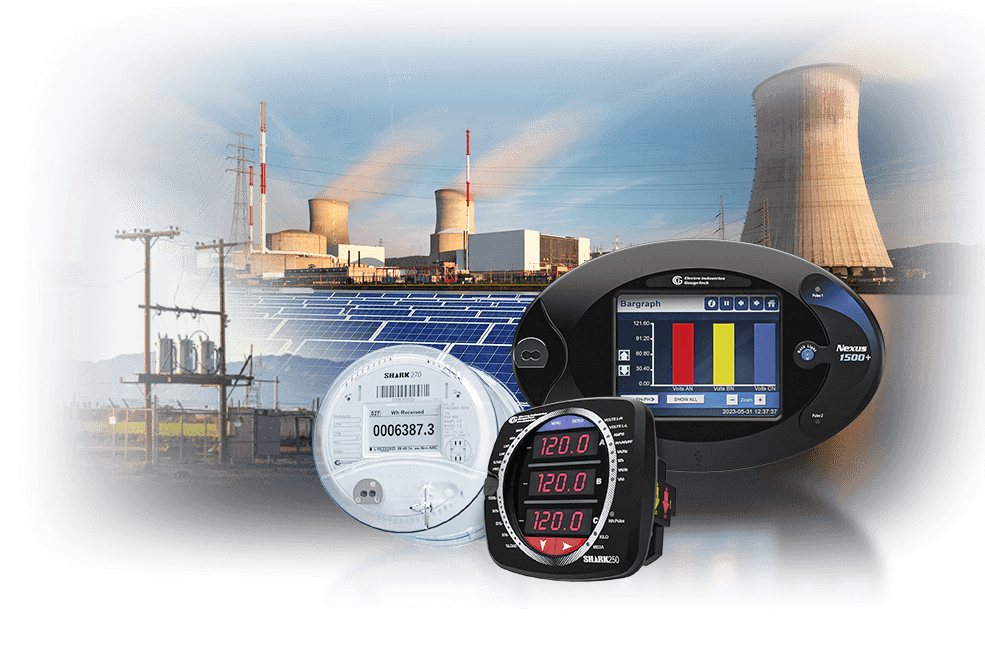
Utility Applications
- Real Time Power Quality Energy Metering
- SCADA System Communication
- Support for Synchrophasor Applications
- Support for Substation Automation

Utility Applications
- Real Time Power Quality Energy Metering
- SCADA System Communication
- Support for Synchrophasor Applications
- Support for Substation Automation
Generation
Introduction
Electrical utilities in the United States and around the world must respond to the growing demands for electrical energy. They also need to meet governmental regulations for reliability and sustainability. And they need to keep their customers, large and small, happy, while keeping their owners and shareholders satisfied as well. Utilities have many moving parts that can present challenges. EIG provides metering equipment and SCADA software to solve many utility challenges.
Generation plants have extensive, complex processes and equipment for generating power and delivering it to transmission lines. Critical needs of Utility Generation are:
- Power quality monitoring, analysis, limit alarms, and waveform capture
- Communication of metering data to SCADA and other plant management applications
- Integration with synchrophasor applications
- Support for substation automation
Real Time Power Quality Metering
To be alerted to any problems with their electrical system and its equipment, generation plant operators need reliable and accurate power quality monitoring. The power quality data must also be communicated to the power management system utilized by the plant.
EIG’s extensive line of advanced power quality meters analyze and report on all power quality indices, such as voltage and current unbalance, harmonic magnitudes, frequency, power factor, etc. They offer high resolution waveform recording and programmable alarm limits for any parameters the meters measure. This data is essential for maintaining optimal functionality of the generation plant.
For integration of utility metering data with existing SCADA and other energy management systems, EIG meters have extensive communication options. Depending on the specific EIG meter, the following communication modes are available:
|
|
Depending on the specific mode, the following communication protocols are supported:
|
|
LTE is a trademark of ETSI.
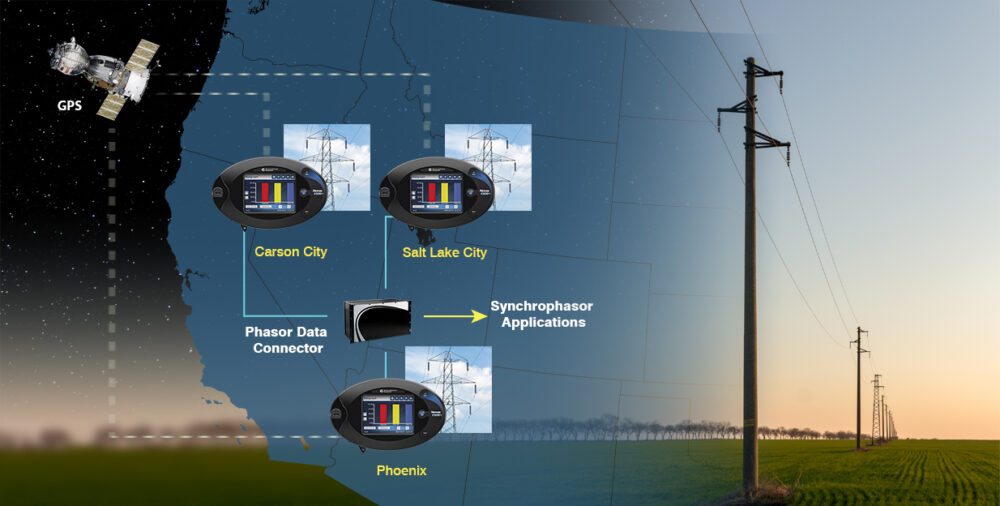
Integration with Synchrophasor Applications
For generation plants that utilize synchrophasor applications for their transformer switching stations, EIG offers the Nexus® 1500+ power quality meter with synchrophasors that meet IEEE C37.118. As a PMU, the Nexus® 1500+ meter:
|
|

Substation Automation Support
To support substation automation, EIG’s power and energy meters support Modbus serial, Modbus over Ethernet, and DNP 3.0 for substation communication. Many EIG meters also support IEC 61850 for seamless integration into substation automation applications. The Nexus® 1500+ meter also offers GOOSE reporting that can be used to capture waveform events from many different areas of the electrical grid. This capability supports post-event analysis, as well as real time awareness of conditions on the grid.
Transmission
Introduction
Electrical utilities in the United States and around the world must respond to the growing demands for electrical energy. They also need to meet governmental regulations for reliability and sustainability. And they need to keep their customers, large and small, happy, while keeping their owners and shareholders satisfied as well. Utilities have many moving parts that can present challenges. EIG provides metering equipment and SCADA software to solve many utility challenges.
Utility Transmission has the following needs:
- Power quality monitoring (PQ) of transmission substations and utility tielines
- Communication of metering data to SCADA systems
- Support for synchrophasor applications
- Substation automation support
Advanced PQ Metering
Maintaining high power quality is essential for successful transmission of electricity. EIG offers advanced power quality meters that meet the highest standards for PQ analysis. They enable you to set limits on all measured parameters and receive emailed alarms if the programmed limits are exceeded. In this way, operators are alerted immediately to conditions that negatively affect power quality, such as voltage surges and sags and current fault events. EIG’s PQ meters measure harmonic magnitude, THD, TDD, power factor, frequency, and all other PQ indices. They offer up to 1024 samples/cycle of waveform recording for post-event analysis.
In addition to measuring power quality, EIG meters offer high accuracy energy measurement. Use our meters to digitize information from substations and critical points on the transmission lines. This information provides a voltage reference for all metered points that is easily communicated to the transmission SCADA or other systems. This voltage reference information is crucial for maintaining transmission system voltage reliability.

Communication to SCADA Systems
EIG meters have extensive communication options for integrating monitored data into existing SCADA systems. Depending on the specific EIG meter, the following communication modes are available:
|
|
Depending on the specific mode, the following communication protocols are supported:
|
|
|
|
|
|
|
|
LTE is a trademark of ETSI.

HMIPQA+™ SCADA Solution
For transmission substations that do not yet have a SCADA system, EIG offers the HMIPQA+™ SCADA solution. It is easily scalable to fit your requirements with highly customizable and intuitive graphical displays of both energy metering and other commodity data. It seamlessly puts the right tools at the operator’s fingertips for informed energy management decisions. Features include:
|
|
Integration with Synchrophasor Applications
For transmission systems that utilize synchrophasor applications for their transformer substations on both ends of the transmission lines, EIG offers the Nexus® 1500+ power quality meter with synchrophasors that meet IEEE C37.118. As a PMU, the Nexus® 1500+ meter:
|
|
Substation Automation Support
To support transmission substation automation, EIG’s power and energy meters support Modbus serial, Modbus over Ethernet, and DNP 3.0 for substation communication. Many EIG meters also support IEC 61850 for seamless integration into substation automation applications. The Nexus® 1450 and 1500+ meters also offer GOOSE reporting that can be used to capture waveform events from many different areas of the electrical grid. This capability supports post-event analysis, as well as real time awareness of conditions on the grid.

Distribution
Introduction
Electrical utilities in the United States and around the world must respond to the growing demands for electrical energy. They also need to meet governmental regulations for reliability and sustainability. And they need to keep their customers, large and small, happy, while keeping their owners and shareholders satisfied as well. Utilities have many moving parts that can present challenges. EIG provides metering equipment and SCADA software to solve many utility challenges.
To address their challenges, Utility Distribution facilities need:
- Power quality analysis
- Accurate revenue metering for critical customers and distribution-connected renewables
- SCADA software for distribution substations
- Substation automation support
Power Quality Analysis
Distribution operators must ensure that the power they distribute meets the requirements of both their customers and government regulations. They also need to make sure any distribution line-connected renewables are not injecting harmonics and/or voltage variability into the distribution lines. To answer these challenges, the distribution system needs comprehensive power quality metering with alarm capability.
EIG’s advanced power quality (PQ) meters offer unrivaled PQ analytics and are certified to the IEC 61000-4-30 Class A Edition 3 standard for PQ meters. Capabilities include up to 1024 samples/cycle waveform recording at 16-bit resolution and transient capture at 50 MHz sampling speed. The meters have limit alarms programming on all measured parameters, for example harmonics and voltage, to dynamically alert operators when conditions arise that need their attention. They offer real time power and energy measurements, harmonics, THD and TDD, and support power quality reporting, including CBEMA and SEMI F47 support. EIG’s PQ meters provide:
- Waveform analysis
- Certified Flicker and Harmonics measurement
- EN 50160 Reporting
- Limit controls using multi-level programming logic
- Alarms on exceeded limits
- Status input triggers
- Voltage reliability measurements


Revenue Metering for Critical Customers
To help utilities service their critical customers and any distribution-connected renewable energy sources, EIG offers advanced revenue meters that meet the highest standards for energy management accuracy. Revenue metering capabilities include full four quadrant metering, energy load profiling with the ability to log virtually unlimited historical trending, transformer and line loss compensation for iron/copper and total substation losses, and CT/PT compensation to correct for errors in current and voltage transformers. EIG’s revenue meters provide load aggregation/universal metering to aggregate or accumulate different loads with pulse inputs so utility products such as gas and water can also be accumulated.

SCADA Software for Distribution Substations
EIG’s HMIPQA+™ application is a next generation SCADA solution. It is easily scalable to fit your requirements with highly customizable and intuitive graphical displays of both energy metering and other commodity data. It seamlessly puts the right tools at the operator’s fingertips for informed energy management decisions. The HMIPQA+™ solution allows you to:
|
|
For distribution customers with existing SCADA systems, EIG meters have extensive communication options for integration into those systems. Depending on the specific EIG meter, the following communication modes are available:
|
|
|
|
|
|
Depending on the specific mode, the following communication protocols are supported:
|
|
|
|
|
|
|
|
LTE is a trademark of ETSI.
Substation Automation Support
To support distribution substation automation, EIG’s power and energy meters support Modbus serial, Modbus over Ethernet, and DNP 3.0 for substation communication. Many EIG meters also support IEC 61850 for seamless integration into substation automation applications. The Nexus® 1450 and 1500+ meters also offer GOOSE reporting that can be used to capture waveform events from many different areas of the electrical grid. This capability supports post-event analysis, as well as real time awareness of conditions on the grid.
Renewables
Introduction
Electrical utilities in the United States and around the world must respond to the growing demands for electrical energy. They also need to meet governmental regulations for reliability and sustainability. And they need to keep their customers, large and small, happy, while keeping their owners and shareholders satisfied as well. Utilities have many moving parts that can present challenges. EIG provides metering equipment and SCADA software to solve many utility challenges.
Renewable energy sources, such as solar and wind farms, offer both opportunities and challenges for the traditional electrical grid. By generating energy from renewable sources, they help to lower carbon emissions. They also offer additional power sources to help meet ever increasing demands for electricity. For traditional utilities, however, they present challenges, especially for transmission and distribution. These challenges must be addressed for successful integration of renewables into the grid.
To address challenges arising from renewables, utilities need the following:
- Accurate metering and power quality (PQ) analysis to monitor voltage compatibility
- Revenue metering for verification of energy consumed and transferred
- Integration of renewables data into utility SCADA applications
- Support for synchrophasor applications
Power Quality Analysis to Ensure Voltage Compatibility
Utilities must ensure voltage compatibility between renewable energy sources and the grid’s voltage. Additionally, power factor, frequency, and harmonics are critical parameters for electrical utilities to monitor to maintain power reliability. EIG’s advanced power quality meters address both the needs of ensuring compatibility and maintaining optimal power quality.
Electrical utilities are mandated to keep their voltage levels within a specified range. To be aligned with the utility’s voltage requirements, a solar installation must inject current without affecting the voltage in the distribution line, e.g., causing a rise in voltage. Being able to monitor the voltage and current characteristics in real time enables utilities to ensure voltage compatibility.
Since solar-generated energy is DC, inverters are used to change the current to the AC that the grid uses. Older inverters can add harmonics to the grid, lessening power quality and reliability. Meters that provide real time power quality data at the point of delivery can be used to monitor and ensure that harmonics are not being introduced to the grid by renewable sources. Limit alarms set on voltage levels, harmonic magnitudes, and power factor can enable utilities to take immediate action, e.g., stopping the renewable source from adding current if the grid voltage is in danger of rising too high or if power factor is being negatively affected.
EIG’s line of advanced power quality meters are certified to ANSI 61000-4-30 Class A, Ed. 3, the highest international PQ standard. In addition to providing real time power quality measurement and high-speed waveform capture, they offer programmable limit alarms on all measured parameters. This means that operators are notified immediately of any PQ problems, such as voltage variability, and can act before the problems escalate and cause power interruptions or damage to equipment.
Integration of Renewables Data into Utility SCADA Applications
For utilities with existing SCADA and other energy management systems, EIG meters have extensive communication options for integration into those systems. Depending on the specific EIG meter, the following communication modes are available:
|
|
Depending on the specific mode, the following communication protocols are supported:
|
|
LTE is a trademark of ETSI.

Revenue Metering for Verification of Energy Consumed and Transferred
When renewables such as solar are connected to the distribution grid, they can both deliver energy to the grid and receive energy from it, depending on factors such as the time of day, when the sun isn’t shining and when there is not enough stored energy for their system. Both receiving and delivering must be monitored by high accuracy revenue metering, to ensure proper compensation for both the utility and the renewable energy operation. Placing a revenue meter on both the renewables’ feeder meter and recloser and the utility’s feeder meter and recloser allows the usage data to be reconciled. Additionally, there are contractual limits on the amount of energy that can be delivered from a renewable source and the quality of that energy, as discussed previously. A specific measure that renewables would want to monitor is VARs, since utilities may pay them for VARs they inject into the system. On the other hand, if there are too many voltage sags and swells that the utility believes are caused by the renewable source, they will drop the renewable connection. Metering data can show how often the renewables have been dropped and whether the utility’s restriction was appropriate. If it was not, the renewable operation may be entitled to compensation from the utility. In the case of wind farms, most of which are connected to transmission lines, the wind farm operators receive tax credits based on the amount of energy generated per site. This is a definite incentive for them to employ accurate metering.
EIG offers advanced revenue meters that meet the highest standards for energy management accuracy. Revenue metering capabilities include full four quadrant metering, energy load profiling with the ability to log virtually unlimited historical trending, transformer and line loss compensation for iron/copper and total substation losses, and CT/ PT compensation to correct for errors in current and voltage transformers.
Support for Synchrophasor Applications
For renewables-connected utility distribution and transmission systems that utilize synchrophasor applications, EIG offers the Nexus® 1500+ power quality meter with synchrophasors that meet IEEE C37.118. As a PMU, the Nexus® 1500+ meter:
|
|
Utility Products
Utility Products
Nexus® 1500+ meter | |
|---|---|
 | Power Quality AnalyzerOrdering Part #: Nexus1500+-D2-60-20-V5-485P-NTRJ-6RO1-6RO1 Synchrophasor Application SupportOrdering Part #: Nexus1500+-D2-60-20-V6-485P-NTRJ-X-X |
Nexus® 1450 meter | |
|---|---|
 | Power Quality Analyzer, IEC 61850Ordering Part #: Nexus1450-D2-60-V2 |
Shark® 270 meter | |
|---|---|
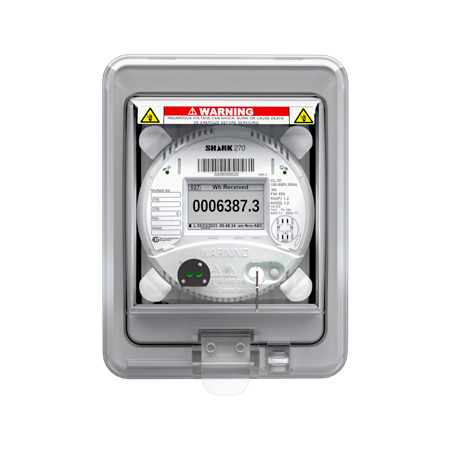 | Revenue MeteringOrdering Part #: Shark270-SWB3-60-2-V2-S-INP100S-X IEC 61850Ordering Part #: Shark270-SWB3-60-2-V3-S-INP100S-INP300S |
Shark® 250 meter | |
|---|---|
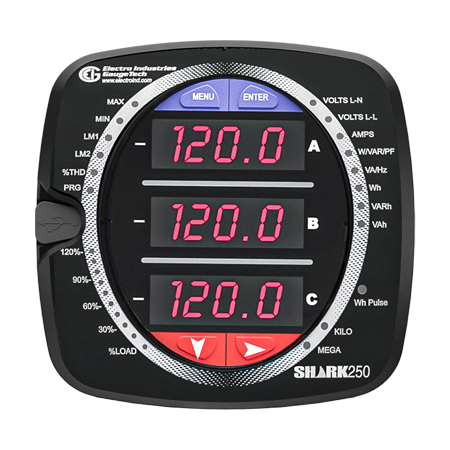 | Power Quality Monitoring, Alarm/Limits, Revenue Metering, and SCADA CommunicationOrdering Part #: Shark250-60-10-V2-D2-INP100S-INP100S IEC 6850Ordering Part #: Shark250-60-10-V2-D2-INP100S-INP300S-X Pulse Counting and Load AggregationOrdering Part #: Shark250-60-10-V2-D2-INP100S-PO1S-X Control ApplicationsOrdering Part #: Shark250-60-10-V2-D2-INP100S-RO1S-X |
HMIPQA+™ – Next Generation SCADA Solution | |
|---|---|
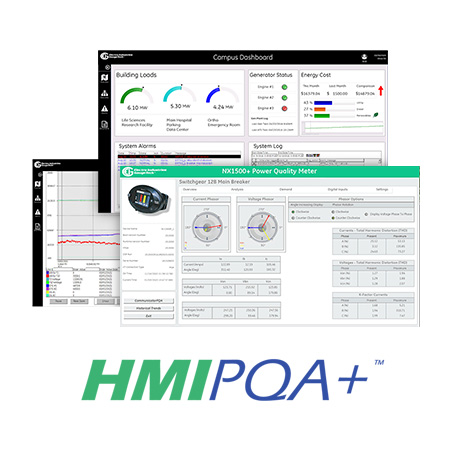 | Simple, scalable, fully customizable application with open connectivity and multi-protocol supportOrdering Part #: Contact EIG sales for ordering information. |
Downloads
Downloads
Solutions Guides

https://www.electroind.com/eigs-energypqa-com-cloud-solution-is-finalist-in-plant-engineerings-2020-product-of-the-year/
https://www.electroind.com/eig-releases-energypqa-com-cloud-based-energy-management-solution/
https://www.electroind.com/facts-you-should-know-about-commercial-energy-waste-in-2019/
https://www.youtube.com/watch?v=XTiIsF1D0Fc
https://www.youtube.com/watch?v=GAVJERWMKeU